A good camera feels invisible until it matters. That is the goal with motion detection at home: quiet during the ordinary ebb of the day, decisive when something out of pattern appears. Getting there is less about buying the most expensive hardware and more about the unglamorous details, especially where you mount cameras, how you tune sensitivity, and how you draw detection zones. I have spent enough nights tracing false alerts back to a waving tree to know that software and settings can make or break a system. The tradecraft below distills what consistently works in real houses, not lab demos.
What motion detection actually sees
Most consumer cameras and video doorbells detect motion using either pixel changes in the image, passive infrared (PIR) sensors that sense heat movement, radar, or some blend. Pixel-based detection is flexible and cheap, but it triggers when light changes or shadows crawl across a wall. PIR ignores shadows and focuses on warm bodies crossing cooler backgrounds, which is why many battery-powered cameras use it to conserve power. The best cameras for home security often fuse the two, cross-checking image motion with PIR or radar to reduce false positives.
Understanding your camera’s method matters. Pixel-based systems need careful zone drawing and sensitivity tuning. PIR-based units rely on placement, angle, and distance, because PIR performs best when a warm object moves across the sensor’s field at a diagonal rather than directly toward it. Radar excels at detecting motion through rain and snow, yet can punch through thin foliage, which complicates zone management.
If you are pursuing DIY home surveillance, read the spec sheet for each camera and treat detection type as a core feature, not an afterthought. Knowing whether your video doorbell leans on pixel analysis versus PIR helps you predict its behavior at dusk, during storms, or when a headlight sweeps your driveway.
The geometry of placement
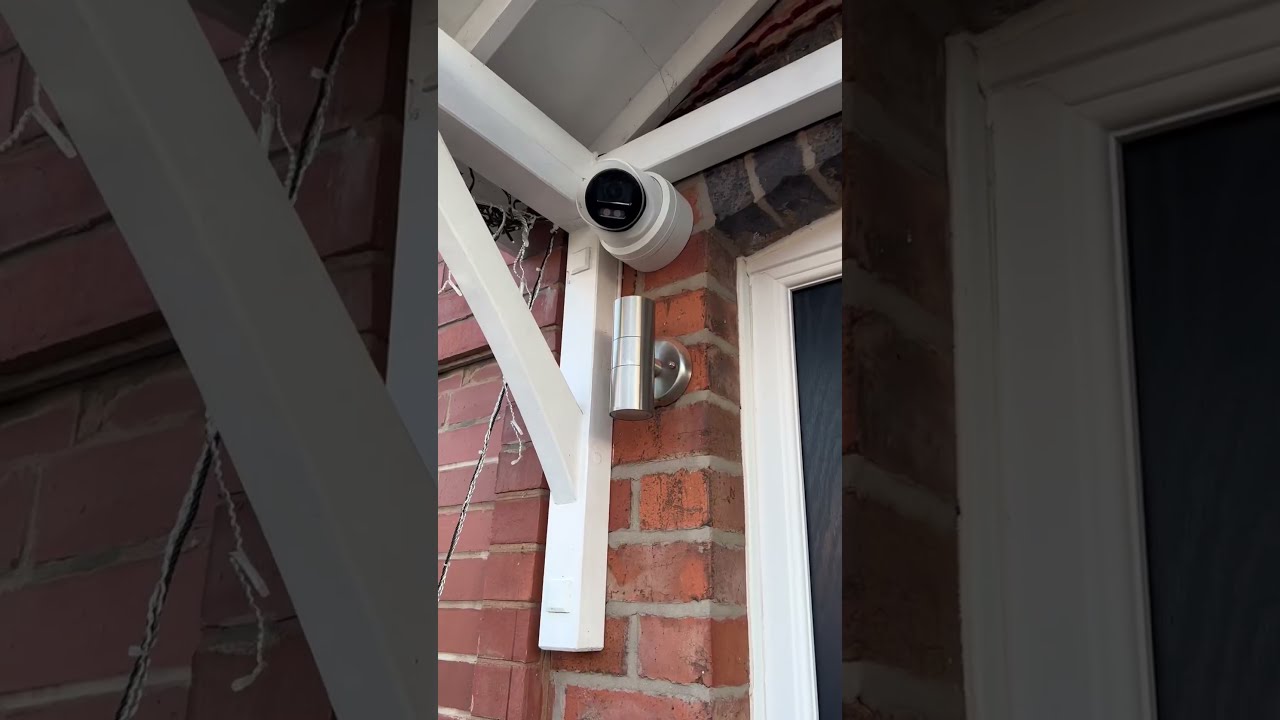
I walk properties with a simple rule: place cameras so that people move across the frame, not straight at https://gregoryeyxc395.lucialpiazzale.com/end-to-end-cctv-health-check-a-preventive-maintenance-workflow-that-works it. Side-to-side motion creates richer pixel change and stronger PIR triggers. Mounting height matters too. Eight to nine feet on an exterior wall is a sweet spot for most fixed-lens cameras. Lower, and you invite tampering and tight vertical angles that miss faces under caps. Higher, and you lose facial detail; heads become ovals.
Angle the camera to avoid the horizon when possible. The sky is an enemy of exposure and motion stability. Clouds shift, light pulses, and pixel-based detectors see noise. Aim slightly downward so the active area is ground, doors, and walkways. If your model supports it, use a wedge mount to fine tune the pitch.
Keep glass out of the equation. Indoors, a camera pointing through a window often struggles at night because infrared reflects back into the lens. During the day, reflections and double-pane refraction can dull motion detection. If you must watch through glass, disable IR, rely on exterior lighting, and accept that pixel detection will be unreliable at night.
Distance and target size are practical limits that show up in real life. Many consumer cameras reliably detect a person at 15 to 25 feet. Beyond that range, pixel changes may be too small, and PIR sensitivity drops off. If you need coverage at 40 feet, choose a model with a narrower field of view or an adjustable lens, or supplement with a second camera. Wider is not always better; a 160-degree lens captures the whole street and, with it, a riot of motion you do not control.
For Fremont neighbors and anyone in similar suburban pockets, prevailing breezes and landscaping shape false alerts more than you might expect. Place exterior cameras so that trees and tall grasses are at the edges, not the center. During the fall in the East Bay, dry leaves become motion magnets. A little pruning does more for alert quality than a week of tinkering in the app.
Doors, driveways, and the path of approach
Think like a visitor or an intruder: the routes that feel natural to walk are the routes your cameras should cut across. Front doors deserve a dedicated camera, often a video doorbell. Side gates, garage entries, and the path from street to porch come next. For driveways, aim to capture the arc a person takes from car to door, not the entire street. Keep public sidewalks out of frame if you can. You gain privacy and reduce irrelevant triggers.
I favor one camera per functional story. The doorbell covers arrivals. A porch or eave camera captures a broader view of the approach. If your driveway is long or curved, place a camera at the bend rather than the street entrance. This yields useful clips of faces and gait, not distant silhouettes.
Backyards are trickier because of pets, pools, and foliage. Mount higher to see over furniture, then use exclusion zones to mask the swaying citrus tree or a trampoline that shifts in wind. Pool decks deserve special attention with both detection and safety. If you have children or visiting families, set a high-priority zone that notifies immediately when a person enters the pool perimeter after certain hours.
Sensitivity is not a personality trait
Every platform calls it something slightly different: sensitivity, motion threshold, detection confidence. The temptation is to leave the default or crank it up. That is a quick route to burnout. The smarter path is to start conservative and test with real movement.
Walk test each camera at dusk and at night, when IR, glare, and headlight flicker confound sensors. Walk the route you expect visitors to take. Wear a hat, carry a package, crouch behind a car. Adjust sensitivity a notch at a time, then repeat. The right sensitivity setting is the lowest level that still registers a normal walk-through in the areas you care about.
Headlights and sunlight reflections create specific failure modes. Headlights produce rapid, intense changes in brightness across the frame. Lower sensitivity and tighter zones help, but the best fix is placement that keeps passing traffic off-camera or at a steep angle. Sunlight reflections off cars or windows will spike pixel-based detection late afternoons. Tilting the camera down a few degrees often eliminates the reflection band without sacrificing coverage.
Battery-powered cameras sharpen the trade-off. Higher sensitivity means more wake-ups and shorter battery life. If the device supports PIR-only wake with pixel verification, enable it. Expect to charge or swap batteries every 1 to 3 months depending on traffic. In busier areas, a small solar panel makes a real difference, particularly through Fremont’s bright summers.
The quiet power of zones
Zones are your scalpel. They fence the camera’s attention to where it matters. Use inclusion zones to draw the areas that should trigger, and exclusion zones to mask known noise like a street, a neighbor’s yard, or a palm frond. Most people underuse zones. Take the time to draw them with intent and they will pay off every day.
A good zone follows human pathways rather than squarish blobs. Trace the top edge along roof lines or fence tops, not the sky. Leave a gutter of empty space between your zone and the horizon or sidewalk. That empty band absorbs passing cars and dog walkers without waking your phone. If your platform allows multiple zones with different priorities, reserve one for high-urgency alerts, like the porch and door handle, and another for lower-priority motion near the driveway.
Seasonal changes matter. In spring, growing shrubs appear in frame and start swaying. In winter, the sun’s lower arc pushes glare into places it never reached in July. Put a quarterly reminder to recheck zones. Fifteen minutes of adjustment averts weeks of false clips.
Smart features that actually help
Manufacturers advertise person detection, package detection, vehicle or pet filters, and schedules. Some of it works, some of it adds latency and misses fast events. Person detection has matured enough that it is worth enabling whenever available. It reduces noise from shadows and wildlife. Package detection is handy for video doorbells but depends heavily on angle and lighting; it tends to miss small envelopes and padded mailers on dark doormats.
Schedules and geofencing are underrated. Set a quiet schedule for yard cameras during daylight hours, then allow person-only alerts at night. Tie arming and disarming to your phone’s location so that when you leave, the system flips into away mode. Families benefit from shared presence control so the system does not alert each time a teenager arrives home before a parent.
If you are considering smart home integration with CCTV, weigh speed and reliability over novelty. Local automations through platforms like HomeKit Secure Video, Home Assistant, or certain NVR ecosystems run faster than cloud chains. Practical automations include turning on exterior lights when a camera detects a person at night, or announcing porch visitors on a smart speaker. Avoid creating routines that spam you with scenes or sirens for minor motion; those erode trust quickly.

Lighting and night vision: shape what the camera sees
A night vision camera guide always starts with one fact: cameras see better with light. Even the best infrared arrays struggle beyond 25 to 35 feet, and images lose color and detail. Motion detection suffers too, especially for pixel-based triggers. Soft, even illumination beats bright hotspots. A 1000-lumen flood on a driveway will blow out the near field and plunge the background into darkness. Instead, use two lower-output fixtures, one on either side, or a single wide-beam LED mounted higher. If you only have one fixture, choose a “warm” 2700 to 3000 K bulb which reduces harsh glare on skin and license plates.
Many premium cameras offer color night vision that stitches low-light color with slow shutter speeds. It looks good for stationary scenes but can blur motion. Test it with a person walking briskly at 20 feet. If faces blur, switch to standard IR or add a small, motion-activated light that kicks on as soon as the camera detects movement. For battery cameras, set a shorter recording pre-roll to capture the first second of action before people pass the field of view.
I often see homeowners point a camera at a floodlit street and wonder why detection fails. Dynamic range kills detail in these scenarios. Shift the camera so the brightest light falls outside the primary zone, or install a visor or hood that blocks glare. Some models accept polarizing filters, which can tame reflections on glass doors and car windshields, though they also reduce overall light.
Video doorbells vs CCTV for motion detection
Video doorbells dominate entry monitoring for good reason. They sit at the right height, watch a constrained area, and often tie in package detection and two-way talk. Their weakness is the busy street that lies just beyond your porch. If passing traffic or pedestrians sit within their field of view, expect more tuning work or strategic repositioning with angled wedges.
CCTV-style cameras, whether standalone Wi-Fi models or PoE domes on an NVR, give broader coverage and better tuning granularity. They typically support more detailed zones, analytic rules, and in some cases, human and vehicle classification done on-device. For motion detection around driveways, side yards, and back patios, a dedicated CCTV-style camera outperforms most doorbells.
If you must choose one for budget reasons, go doorbell first. It provides the most actionable clips and acts as a visible deterrent. Then expand with one or two additional cameras where you need broader motion coverage. Affordable home camera systems now deliver usable person detection and 2K or 4K resolution without subscription traps. Pay close attention to how motion detection features are tiered between free and paid plans; person detection or rich notifications sometimes live behind a subscription.
Calibration from the couch is only half the job
I used to do all my tweaking inside the app, watching recorded clips. That misses critical context. Walk the property while watching the live view on your phone. Have a family member cross paths while you adjust zones. Note whether you still get clean, high-contrast outlines at night, not just the presence of motion. Test in rain and wind if you can. Fremont’s winter storms produce movement no still afternoon can simulate.
Pay attention to camera stability. A slightly loose mount will vibrate in a breeze and generate phantom motion. Heavy-gauge mounts and short standoffs fare better. Vinyl siding clips can flex; use the mounting block if available. Indoors, HVAC vents and ceiling fans can move curtains and plants just enough to trigger alerts. Either mask them with zones or reposition the camera.
Privacy, neighbors, and the law of unintended angles
Motion detection does not care about property lines. You should. Keep your zones off neighbor yards and windows. That is neighborly, and in some areas, required. If your camera captures part of a public sidewalk or street, avoid recording audio unless you understand local consent laws. Some systems let you record video but disable audio capture to stay on the safe side.
For families, cameras inside the home demand extra restraint. Limit interior motion alerts to entry points while away, not every hallway. A camera in the living room watching a sliding door can be valuable, but turn off continuous motion alerts when people are home. Nobody wants their relaxing evening turned into a stream of notifications.
Burglary prevention is about pattern disruption
Cameras do not stop every break-in. They change behavior at the margins and generate evidence. When paired with lighting, visible signage, a known neighborhood watch, and simple discipline with doors and windows, they help. In my experience, the combination of a video doorbell with well-tuned motion detection, a single floodlight camera over the driveway, and a side gate camera deters casual prowlers. They do not like being recorded at multiple angles as they approach.
If you are looking for home security tips specific to Fremont and similar cities with commuter traffic and dense cul-de-sacs, focus on approaches from the street to the porch and side gate access along fences. Keep motion zones narrow, prune vegetation near the porch, and ensure your porch light runs on a dusk-to-dawn schedule. Package theft declines sharply when the porch is bright, cameras are visible, and notifications reach you promptly.
Taming false alerts without missing the real ones
You will never reach zero false alerts. The aim is to lower them to a point where the ones you see are meaningful and you keep notifications enabled. The levers are predictable: placement that favors cross-frame motion, sensitivity tuned to the lowest reliable level, well-drawn zones, and person detection filters.
Do not ignore latency. If it takes 10 to 20 seconds for your phone to ping, you will miss the chance to speak to a visitor or spook a porch pirate. Wi-Fi quality matters more than most people realize. Use 2.4 GHz for range to outdoor cameras, but make sure your router can handle multiple devices without choking. Mesh systems help, though a cheap mesh with poor backhaul can be worse than a single strong router. For PoE cameras, a solid switch and cable runs pay off forever. If you are building toward a larger system, an NVR with built-in analytics keeps motion processing local and fast.
Family-first configuration
A security setup that annoys your family will be disabled within weeks. Build it to serve them. Shared access with per-person notification settings keeps peace. For example, the person who works from home may not want midday alerts from the side yard, while the person who commutes appreciates a summary when they return. If you have gadgets like smart locks and garage controllers, line up motion detection with practical automations. When the driveway camera spots a known car arriving after 6 pm, turn on entry lights and heat. When the doorbell sees a person at night, bring the foyer lights to 30 percent. These integrations move your system from surveillance to family safety technology that actually helps daily life.
How to get from noisy to trustworthy in a weekend
Here is a compact plan I use with clients when their phones are drowning in alerts.
- Day 1 morning: walk the property, choose mounting locations that favor cross-frame motion, and install mounts at 8 to 9 feet where practical. Day 1 evening: set zones tightly around doors, walkways, and the driveway approach. Disable street-facing areas. Start with mid-low sensitivity. Day 2 dusk: conduct live walk tests at 10, 20, and 30 feet, wearing a cap and carrying a box. Adjust sensitivity down until the 20-foot pass still triggers reliably. Day 2 night: add or reposition exterior lighting to reduce hotspots, then retest motion. Enable person detection and set schedules for quiet hours. End of weekend: prune obvious foliage sources, tighten loose mounts, and verify notification speed on all phones.
When to upgrade hardware
Sometimes settings cannot overcome physics. If your porch is deep and your doorbell sits opposite a bright street, the sensor may always struggle with backlighting. A doorbell with HDR and better person detection will produce meaningfully fewer false triggers. If your side yard is 60 feet long, a camera with a narrower field of view or a varifocal lens will detect motion better than an ultra-wide model. If you are piecing together affordable home camera systems, choose at least one device with strong on-device analytics so you are not dependent on cloud processing for every alert.
Night performance is the most common upgrade trigger. If faces are consistently unrecognizable after dark, either add lighting or pick a camera with a larger sensor, stronger IR, or true color night vision with low-light performance under 0.01 lux. Numbers on spec sheets vary in honesty, but real tests and reviews that show side-by-sides are informative. Remember, light solves problems software cannot.
Maintenance is part of the craft
Dust, cobwebs, and pollen create ghost motion and soften images. Wipe lenses and IR emitters monthly, more often during spring. After heavy rain, check angles and mounts. Firmware updates sometimes change detection behavior. Skim the release notes before you update, and revisit zones afterward. Keep a simple changelog of adjustments so when a problem pops up, you can roll back methodically instead of guessing.
The quiet, reliable system you barely notice
A home camera system earns its keep on the most ordinary Tuesday, not just during a rare event. It chimes when someone leaves a package and falls silent the rest of the day. It lights the path when you pull into the driveway and ignores the neighbor’s cat at 2 am. That outcome comes from decisions you can control: precise placement, disciplined sensitivity, and zones drawn like a surveyor.
If you are starting fresh, begin at the front door, add the driveway, then tie in side entries. Test during transitions of light. Prefer strong angles over wide vistas. Use person detection and schedules judiciously. Integrate only the automations that shorten steps in your day. With a few hours of attention, motion detection becomes not just another feature, but a steady partner in home burglary prevention and everyday peace of mind.